Address
304 North Cardinal
St. Dorchester Center, MA 02124
Work Hours
Monday to Friday: 7AM - 7PM
Weekend: 10AM - 5PM
Address
304 North Cardinal
St. Dorchester Center, MA 02124
Work Hours
Monday to Friday: 7AM - 7PM
Weekend: 10AM - 5PM
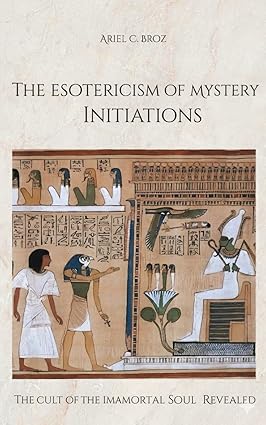
In this interview we talk with Ariel C Broz, we discuss his past and most recent publications as well as his personal journey into the mysteries. If you enjoy this post, please let us know in the comments and share it with others who would enjoy the content.
Question 1: Your journey spans decades and many traditions. Could you share how your exploration of diverse wisdom traditions (such as Indian philosophies, Theosophy, esoteric Christianity, and Buddhism) has shaped the themes and ideas you write about?
These traditions have indeed been my most important guides – and I must say, you have done your background research astonishingly well. When I was twenty-four, I had become deeply weary of my lifestyle, which had spiralled into excess and mirrored the worst tendencies of the cultural current I belonged to at the time. I felt, inwardly and unmistakably, that I was heading toward another great failure.
And yet, I had already realized the existence of a power higher than the human mind – not as a belief, but as an undeniable inner certainty. Because of that, and with a kind of naïve determination, I went to the library intending to borrow books on theology. However, a small, spiritually guided “reading error” intervened, and I walked out instead with Eunice and Felix Layton’s book Theosophy: Key to Understanding – not theology at all. The second book I borrowed on that same visit was Karma and Illnesses by the Finnish sage Pekka Ervast.
That early Saturday morning, as I browsed these books – and was unexpectedly delighted by the absence of a hangover – I felt a powerful inner command: to abandon all my destructive habits immediately and completely. From that moment forward, I began reading books of this nature constantly. Without realizing it, I feared that if I stopped, the old pain would return. In a sense, I was running from myself – and yet, at the same time, I was learning.
I read everything I could find on spiritual philosophy, and over the years my personal library grew into thousands of volumes. I noticed that the traditions you mentioned possessed a kind of uncompromising clarity – a foundation of real knowledge – while other approaches were helpful but often diluted, offering a broader doorway rather than depth.
Gradually, I became convinced that the esoteric path divides into two directions: the pursuit of enlightenment, and the road of deep occult knowledge. The latter is dangerous to walk, yet I felt a profound pull toward it, and I have attempted to follow it ever since – with purity, meditation, and a ruthless honesty toward myself as my tools.
All of this inevitably shaped my writing. I live and breathe the occult sciences, even though during the last twenty years I have also explored other dimensions of life. Yet the original wisdom traditions continue to stand above everything else, forming the evaluative foundation upon which I measure all other knowledge – including the discoveries of classical science, whose worldview leaves no doorway for spirit to enter, bound as it is by its own exclusionary principles.
Question 2: You’ve written books of aphorisms—brief, insightful statements of wisdom. What draws you to the aphorism form, and how do these concise insights fit into your spiritual and literary work?
I have always felt a strong impulse to write down sudden flashes of insight — compact “thought-packages” that later must be unpacked and expressed as precisely as possible in language. My first notebook for aphorisms and reflections was started when I was nine years old.
My aphorisms — or perhaps more accurately, my fragments — arise from inner associative movements during ordinary daily activities. They must be written down immediately so that the freshness of the insight remains intact; otherwise they dissolve into pale memories stripped of their original spirit. For this reason, I used to abandon whatever was around me and rush to the nearest notebook to write. Eventually, my wife learned not to ask, “What now?”
These flashes can relate to any area of life, yet they always contain an esoteric-subjective undertone — a dimension without which an aphorism often collapses into mere stylistic cleverness or surface-level wordplay. My aphoristic writing is rarely extremely short; more often it spans from a few lines to half a page. About fifteen years ago I counted the entries across my notebooks and arrived at a number of roughly twenty thousand. Naturally, there is overlap: multiple attempts at describing the same principle from different angles, and various levels of early structural frameworks. But at least I will have plenty to occupy me in old age.
In recent years I have shifted to dictation software, which converts speech directly into text, although the drafts still require refining. I have transferred some of these fragments to my blogs and published several books drawn from them.
No matter how short the main text of the aphorism may be, I have always paired it — at least in publication — with a long compound-word title: a kind of deliberate linguistic monster. It approaches the subject from a different angle, revealing the hidden core idea between the lines more clearly.
Question 3: Your collections of “bridge essays” aim to open up the deeper challenges of spirituality and life. How would you explain a “bridge essay” to someone not familiar with the term, and what do you hope readers gain from these essays?
The mind operates through association. It advances along a chain of memories and images that trigger one another, sometimes interrupted by an external stimulus, from which a new inner chain begins. In other words, the mind moves — often without being noticed — across a bridge into a new thought.
In my so-called “bridge essays,” I have brought this process into written form, hoping it may also help readers become more aware of the workings of their own thinking. The chapters in this Life Series are not random selections drawn from disparate areas of experience; rather, they are linked into a logical sequence in which each step leads organically to the next. At times, the path loops back to deepen a theme already explored — because that is also how the mind behaves.
In this way, I have attempted to create a new method for presenting subjects that are often considered difficult or abstract. A rigidly linear focus on one topic is, in truth, neither natural nor particularly engaging. This associative style allows the reader to encounter something unexpected — yet still connected to what came before — just as the mind itself leaps, through its inner connections, into a seemingly different subject while retaining a coherent logic.
My hope is that readers will find signposts for their own journey through life, for this series touches on themes drawn from the full span between earth and sky. To name only a few: it explores the pitfalls and pain points of the spiritual search, the nature of evil, the origins of narcissism, the fear that arises on the inner path and the proper way to overcome it, the distortions of religion, the hidden dogmas within science, and the dilemma of repression and denial — among many others.
Question 4: In your novel trilogy, you explore mystery-religion themes and other spiritual questions through storytelling. How does writing fiction help you examine esoteric ideas differently than in your non-fiction works? What do you hope readers experience when they engage with your novels?
It has long frustrated me that in modern fiction, the great wisdom of ancient Egypt — and the brilliant mystery religion at the core of nearly three thousand years of culture — has been almost entirely absent. Instead, the opposite has too often occurred: Egyptians are portrayed as scheming fools, distorted into crude caricatures that merely reflect the unconscious wounds and anxieties of our own era.
I had studied the work of the Egyptologist Miroslav Bárta on Kairsu, the vizier of Pharaoh Nyuserre — “the man who had a fine hand” — and he became the protagonist of the first volume of my trilogy. Because I also have my own theory on how the great pyramids were built, I wanted that dimension to be present as well. Yet at the very center of the narrative, I placed the secret Osirian Mysteries — the initiatory process through which human beings were transformed into gods by being led into true knowledge of the otherworld.
Much of the material I had gathered for my non-fiction research found its way into the novel, and I have kept it as factual and historically grounded as possible. Whether I have fully captured the atmosphere of the period, I cannot judge — that remains for others to decide. Pharaoh Khufu and his lesser-known, heretical son Djedefra appear in The Pharaoh’s Vizier, as does the royal grandmother Hetepheres, for whom I developed an unexpected affection.
I also had another motive: to contrast the real practices of truly dark and truly luminous magic from the standpoint of goodness and clarity — especially in a time when playful or artificial forms of “magic” dominate, particularly in so-called romantic fantasy. The novel is also a story of reincarnation, and in its later parts it leads — in Egyptian terms — to Khent-Amentiu, or Atlantis, which I have attempted to describe through the framework offered by Plato, yet without slipping into exaggeration: though yes, vimanas do appear there.
All in all, when one is speaking in an esoteric voice, fiction is, in my view, an excellent way to present hidden truths — from reincarnation to the dangers and trials of the spiritual path. I also hope the reader may, even briefly, step outside the invisible dystopia we live in today and receive a glimpse of the forgotten spiritual practices buried beneath the weight of materialism.
And strangely, I must admit: I love the Wisdom Temple of Atlantis in my book so deeply that I always find myself in tears when — during my read-throughs — the black magicians destroy it. I am, even now, close to tears while writing this, because of the emotional memory that scene carries.
Question 5: You have authored works under different names (aliases). How do these different author identities relate to your work? Do you see them as different facets reflecting different themes or periods of your writing career?
Ariel C. Broz is simply a more international version of my earlier pen name, R. A. Karmanen. I prefer to keep my real identity private, as I am not seeking fame or public attention, and I am quite content to remain an unknown, ordinary, and rather poor man living somewhere in Finland.
Over the last couple of years, I have republished many of the works originally written under the name R. A. Karmanen, using the opportunity — as a literary perfectionist — to refine and polish the texts further. My intention is to eventually release nearly my entire body of work under the Ariel C. Broz name.
This has, however, created an unexpected problem: because of the rapid publishing pace, some have suspected that I am producing my books with the help of artificial intelligence. In reality, the reason is simply the revised republication of earlier manuscripts.
And as a side note, I am not enthusiastic at all about AI entering the field of creative writing. It removes from human beings the joy — and necessity — of true creation. None of my books have been written using AI; the ideas and the text itself are entirely my own.
However, my English proficiency is limited, and with considerable effort I have translated my most recent book, The Esotericism of the Mystery Initiations, with the assistance of AI as a supportive tool. I can only hope the result is satisfactory and free from expressions that might sound unusual to a native speaker.
Question 6: Your work spans aphorisms, essays, fiction, and scholarly writing. How do you decide which form—novel, essay collection, aphorism, etc.—is most suitable for a particular idea or message you want to convey?
I have always tried to think in terms of truth, and to express things according to its requirements — everything else moves aside. I have spoken of many themes in many forms: What constitutes a good and meaningful life? How does the universe arise and evolve through the work of creative forces? What is the purpose of existence? These questions have been expressed in countless ways, yet it is true that some subjects require a more specialized, non-fiction-oriented approach.
For example, my recent book on the mystery initiations demanded a level of precision and specialization that made the non-fiction format the most suitable choice. However, even in my non-fiction work, I avoid the dry academic tone that so often throws the essential child out with the bathwater. I consider the idea more important than the rigid terminology that academia tends to freeze into fixed conceptual labels. For that reason, I will often use multiple terms for the same principle, since they all point to the same idea. The idea is what matters — not an exhausting list of sanctioned terminological clarifications. A person with awakened depth-perception will understand.
For this reason, academic texts often end up studying the finger pointing at the moon rather than the moon itself — and the result becomes mere informational hair-splitting, without any sensitivity to nuance. Reaching the level of the idea — and remaining there — is essential when exploring subjective depths.
I should also mention that I once wrote a book critiquing science titled 95 Fragmentary Theses on the Door of the Temple of Scientific Dogma, but it has sold very little — such is the unquestioned reverence toward the scientific method in our time. Yet the scientific approach, by its very nature, cannot reach all aspects of life, and because of this, a great portion of reality is missing from our worldview — a void that materialism has attempted to fill over the centuries.
Question 7: Your readers include academics, meditators, ceremonial magicians, yogis, martial artists, and more. How do you balance such a diverse audience in your writing, so that your work resonates with both scholarly readers and practitioners in the esoteric arts?
My response here is very similar to the one given above: I do not really think about a target audience. Instead, I focus on expressing what I feel must be said — refining what I perceive as truth as far as possible from my personal sympathies and antipathies. (Truth remains true regardless of what I personally think of it.)
By nature, I am kind, gentle, and conciliatory — but when I write, all of that falls away. I simply speak the truth, or perhaps more accurately, what I understand as truth — as correctly and respectfully as possible, yet without unnecessary softening or avoidance.
I do not approach writing from the mindset that my work would sell better if I tried to please a certain demographic. This is deeply liberating, and it means I never experience “blank page syndrome.” Those who feel called to read my books will read them, and they will take from them whatever resonates — ideally with enough open-mindedness to forgive my errors and inevitable misinterpretations.
Question 8: When writing about esoteric topics, how do you balance rigorous research with the personal, experiential side of spiritual practice? Do you rely more on historical texts and scholarship, direct inner experience, or a combination of both when developing your ideas?
I rely primarily on a kind of synthesis filtered through my own lived consciousness, yet I also draw from scholarly research and from more freely expressive thinkers. Even in my historical wisdom-novels, I have always valued as much historical accuracy as possible. Something within me resists creating purely from imagination — even in fiction — although of course the storyline must still be shaped.
Much of my writing is concerned with mapping the inner dimension of depth, because mere reading and remembering are not enough; understanding, internalization, and insight are required. I try to express these flashes of realization through long, unfolding sentences that deliberately push aside the dry, nuance-resistant tone of academic writing.
To be clear: complexity and subjective depth are not the same. They are two entirely different directions — and the latter is now in strong cultural opposition, simply because it cannot be measured with external instruments. And yet, it undeniably exists.
When I later discovered what happens to a human being in modern silence chambers, I recognized why Osiris was called the Lord of Silence.
Ariel C. Broz
Question 9: Your latest book explores ancient mystery rituals and the idea of “dying while alive” or crossing the threshold of death. What inspired you to write about this subject, and what do you hope readers will understand or experience as a result?
The grief of death can be overwhelming. I wanted, in my own way, to help ease the suffering that arises when someone dies and their loved ones are left with the terrible ache of never seeing them again. A sentence from Plutarch regarding the Mysteries had burned itself deeply into my consciousness: “At the moment of death, the soul undergoes the same experiences as those who are initiated into the Great Mysteries.” I wanted to understand what the Ancient Mysteries truly were.
Very little information about them survives, and in accordance with the spirit of our age, exoteric declarative statements about the Mysteries have overshadowed the tiny remaining fragments of esoteric, experiential knowledge. When I later discovered what happens to a human being in modern silence chambers, I recognized why Osiris was called the Lord of Silence.
A person can usually endure the absolute silence of such laboratories — where the decibel level is below zero — only for a short time. Soon an unbearable inner pressure arises, and the individual longs to escape back into the soft background-noise of the world. It is also known that, in prolonged complete silence where the senses are deprived of function, hallucinations begin. Yet behind this sensory stillness something new emerges — though first one must pass the threshold guardian and the immense terror it evokes.
Anyone who has explored the depths of subjective consciousness long enough knows that hallucinations are part of the fabric of reality — they do not arise irrationally except in a very unclean mind. Conversely, the purer the mind becomes through years of inner discipline — the kind we know was cultivated in ancient temples, such as the Pythagorean school — the purer these visions become, and eventually the experience of conscious separation from the body arises. The Egyptian Book of the Dead alludes to this when it says: “Allow him, upon returning, to gaze upon his body.”
This marked the beginning of the so-called Lesser Mysteries — the experiential, irrefutable realization that a human being is a soul, not merely a body. The initiated Plato called the body an oyster shell — a prison of the soul.
The subject is far too vast to fully explain here, but its essence is this: the Mysteries gave the initiate an experience of immeasurable value. The one who emerged from the perfect silence chambers of the Temple of Heliopolis — passing the red granite obelisk that still stands there today — could truthfully say:
“Farewell to you who have experienced something you could never before have imagined.
You have gone from being human — to being divine.”
The Mysteries removed the fear and sorrow of death. Their adapted maxim was:
“He who dies while living does not die when dying.”
Question 10: Over the decades of writing, how has your approach or perspective evolved? Are there themes or ideas you find yourself returning to again and again, or new directions you’ve taken since your earlier works?
I find that I can still agree with almost everything I wrote in the early stages of my work. In my blogs, I continue to explore themes related to the secret of lasting happiness and the preservation of joy, sensitivity, and emotional depth. These capacities are constantly threatened by the image-saturated stream of materialistic hedonism and abundance-culture in which we now live.
If I were to name a new direction in my writing, it would be the deeply esoteric novels I have been working on in recent years. Fiction, I believe, can serve the spiritual path, yet it is still a relatively uncommon approach, as many people continue to assume that spiritual insight must come primarily from formal, non-fiction texts.
I have been trying to walk — in my own humble way — along the path once opened by Zanoni (though I would never compare my work to that masterpiece). Still, I am convinced that spirituality and esoteric knowledge are gradually moving toward expression in the novel form — a space currently occupied, and to some degree overshadowed, by irrational and often meaning-empty fantasy literature.
Question 11: Your work often weaves together Eastern and Western esoteric ideas. How do you navigate integrating different traditions, and what common threads do you see between them in your writing?
In my view, all meaningful subjects are connected by truth — insofar as truth is truly present in them, and they are not merely self-generated linguistic constructions without grounding. My approach, therefore, is to enter a subject from within, using the body of deep esoteric understanding I have accumulated and personally tested over my lifetime. Into that inner framework I then integrate new pieces. The structure dictates what belongs — not my personal desire to believe.
In contemporary culture, almost the opposite dynamic prevails: what might be called a warehouse of external, nuance-less, transferred information. When viewed from that external framework, it may appear as though an author is borrowing from various traditions according to preference or temperament. In reality, at least for me, it is more an impersonal selection guided by truth itself — not by personal taste. It is a controlled process.
Seen in this way, a clear distinction emerges between the learned and the wise. My aspiration is toward the latter. The learned gather sterilized, laboratory-tested declarations of knowledge — information that often cannot truly integrate with anything deeper. The wise (or in my case, one who merely admires wisdom) gather experiential insights — tested, rooted, and capable of forming meaningful connections with other truths.
When the process is genuine and one’s way of living aligns with it, the result is a natural inner clarity — a capacity for direct seeing. With it, one can recognize the same essential idea in both Eastern and Western traditions. Thus, the synthesis of traditions is not really a synthesis at all — but the recognition of an inner, truth-aligned sameness.
Question 12: After writing extensively on these deep topics, what is the core insight or question you hope readers will take away from your body of work? In other words, what message do you ultimately want to convey through your books?
Here are a few points in list form that come immediately to mind:
Question 13: Throughout your many years of exploration and writing, is there a particular mystery or question in the esoteric realm that continues to fascinate and motivate you to explore further?
Among other things, I remain deeply interested in the events surrounding the end of the Pleistocene epoch. I am convinced that immense upheavals took place during that period, and that the disappearance of the Ice Age glaciation was not as calm or gradual as is commonly assumed. There may still be traces of the humanity that lived at that time — traces that have not yet been properly investigated.
One of my hopes has been to travel to these locations, as well as to other esoterically significant sacred sites around the world, to write a book based on the atmosphere of those places — and to take extensive photographs. However, I have already written a small non-fiction book on the catastrophic events at the end of the Ice Age roughly ten years ago, titled Atlantis and the Catastrophe at the End of the Ice Age.
Perhaps I will simply return to that manuscript and begin expanding it, since travel has become prohibitively expensive. Such an expansion would, of course, require thorough research, and to my understanding, new material has surfaced recently.
My somewhat extravagant hope is that one day we may discover evidence of an ancient high civilization — the culture that originally developed the transformative core of the Mystery Initiations: the deliberate use of extreme isolation, immobility, darkness, and perfect silence. The closing of the senses was essential in the Mysteries, for the etymology of the word mystery is commonly traced to the ancient root múō — meaning to close, to be shut, or to keep silent.


